How Well Are You Recovering?

Most people understand that exercise is a healthy activity to consistently engage in. Incorporating intense exercise days into your routine adds even more benefit as long as proper recovery is facilitated between these workouts. For this reason, there should be variety between bouts of intense and moderate/light exercise.

However, in many situations this is not enough to facilitate optimal recovery between strenuous workouts. There are signs that this may be occurring. You may feel more tired, worn down or less motivated to exercise. Perhaps your muscle soreness may be lasting longer than usual or your performance in the gym is regressing. These are just a few signs that your recovery could use some improvement.

You can start by incorporating a “de-load” period of just a few days or a week. During this time period, you will only perform light workouts that emphasize proper movement with minimal loads on the body. This is extremely beneficial after 3-4 weeks of continuous intense exercise.

Next, it is important to determine if your recovery is being limited from factors outside of the gym. The body processes stress cumulatively. Physical stress, emotional stress, stress from work, etc. All of these stressors accumulate in the body. The more these stressors accumulate, the more focus needs to be placed on recovery.

The body will not recovery as quickly from an intense workout when there is also a great deal of stress at work or at home. During these times, it is best to incorporate an extra recovery day into training, decrease training intensity or incorporate other recovery strategies.

Implement a relaxing walk outdoors into your workday if increased stress can be attributed to work. Learn to meditate for 5-10 minutes a day or simply ensure that you are getting to bed earlier.

Analyzing your workouts as well as the stressors in your life can help you decide if you need to incorporate strategies to help you recover better. This will ultimately improve your performance in the gym and your overall health.
Plantarfascia Pain: More Than Rolling Out On A Tennis Ball!

As the summer begins so does the incidence of plantar fascia pain in addition to many sports injuries. Warmer weather often encourages people to begin running outside or increase their running volume. This is a great thing as spending more time outside, away from desks, computers and smart phones is extremely beneficial (see previous blog posts for more info on this!). However, the body is often ill-prepared for running when first jumping back into things.

Running is a repetitive movement involving continuous impact on the ground beneath the body. This repetition will also result in several repetitions of any movement compensation that may be present. As these repetitions accumulate so does the stress associated with them and suddenly pain can occur.

This does not mean that running is a bad activity. It simply may expose something that was already there.

The foot is an area that often to compensates for things that may or may not be occurring elsewhere in the body. Many people pronate or flatten the arches of their feet to better shock absorb or advance the body forward. However, this is usually a compensation that is occurring in place of an area that may not being doing its job optimally. For example, the body will compensate at the foot when it is not able to move properly at the pelvis and hips during the running cycle.

Other people may have high arches which creates a very rigid foot and displaces the mass of the body onto the outside of the foot. This results in poor shock absorption when the foot contacts the ground and decreased control from the moment the foot hits the ground. A high arch is often created when the body is unstable in the lower back, pelvis, hips or knees. The foot creates a larger arch and becomes excessively stable to compensate for a lack of stability somewhere else.

Many people’s first solution when dealing with plantarfascia pain is to roll the bottom of their foot on a tennis ball as a self-massage technique. This can be helpful however will only provide temporary symptom relief as it is not solving the root cause of the issue.

The best way to deal with plantarfascia pain is to discover the root causes of the issue and address it accordingly. Our body is a system that works together and we must treat it as such in order to get out of pain and back to running or whatever it is that we love to do.

Are You Moving Poorly?

Do you wake up in the morning feeling stiff? Do you feel that you need to foam roll and stretch prior to all workouts to “loosen up”? Perhaps you are unable to squat, deadlift, perform a pullup or lift something overhead without feeling like you are straining and compensating to do so.

Many clinicians will refer to an inefficient or restricted way of moving as a movement dysfunction. However, is there a wrong way to move?

There is no wrong way to move. Your body will restrict movements for a purpose and perhaps it is restricting motion to protect an area that is under increased stress. For a real-life example, imagine that you are walking on a tight rope. The body feels unstable so it contracts many different muscles simultaneously to create more stiffness and control on an unstable surface.

Perhaps a lack of mobility or stiffness is not your issue, but you notice that your movements are not very efficient. Your body is prioritizing your current movements and doing whatever it can to handle the current challenge. Your body will figure out an alternative way to press a barbell overhead or pick your child up off of the floor when you cannot maintain optimal technique to do so. This a natural survival strategy to deal with the most immediate concern and handle future implications at a later time.

This is not a wrong way to move as it allows you to get through the current moment, however, it is important to understand that you are allowing stress to accumulate which may have future implications. Furthermore, a lack of mobility or stiffness is occurring for a reason and it is important to discover why that is so that it can be addressed.

No way of moving is wrong, however, your standard way of moving should be efficient and fluid so that you are not constantly trying to survive the moment.

For this reason, it important to get assessed by a qualified clinician. For more information contact me at zacharyc@cohenhealth.com .

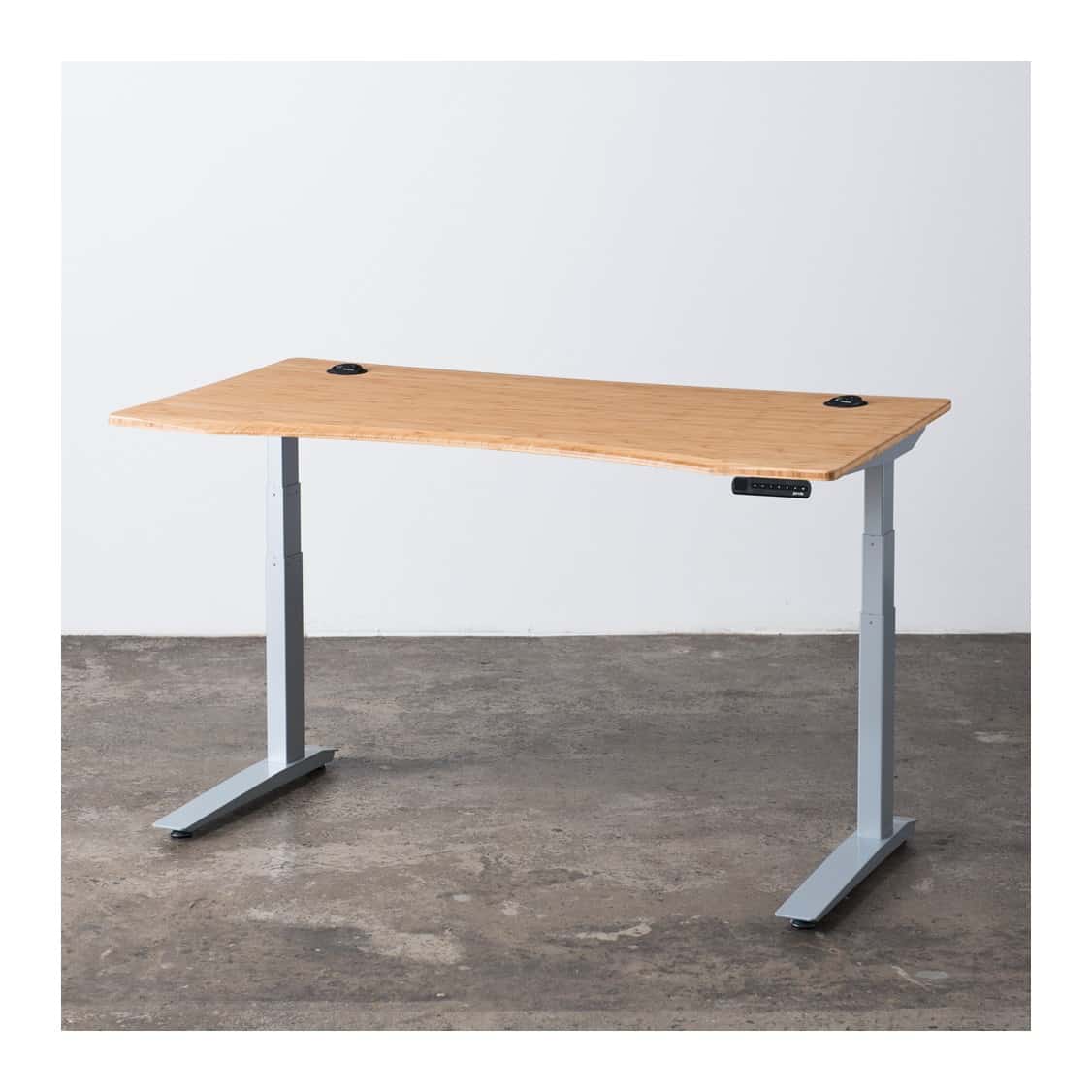
Standing Desks: What’s The Verdict?

Recently many companies have begun paying more attention to the health of their workers, specifically in regards to work station set ups. Great improvements have been made in this area and as such I am constantly asked whether a patient should get a standing desk.

My answer to this question is never as simple as “yes” or “no.” As with many questions, the answer is “it depends.”

Are you sitting all day? Then you likely could benefit from incorporating more standing into your day. In this case, a standing desk would be a good thing to look into.

Are you already changing positions between sitting and standing at work with greater frequency? Do you get up and walk to the water cooler every 20-30 minutes? If this is the case, a standing desk may not be your most immediate concern.

The human body enjoys variability. In other words, it flourishes when it can adapt in many different ways. Think of your heart rate. It rises when you are exercising and then lowers back down to the resting rate after you recover. A healthy heart is constantly adjusting to the demands of life. In the most basic sense, this is an example of cardiovascular variability.

Our movement system enjoys being variable as well. If you are sitting constantly then incorporating more standing can make you more resilient to continued stiffness and discomfort. In this case, a standing desk may provide you with more variability so that you can switch between sitting and standing.

However, a standing desk is just one tool to help to continue to maintain a healthy lifestyle. Check out the other Cohen Health and Performance blog posts to learn more useful tips and information!

What Do You Know About Your Pain?

What do you even know about pain?!

I am sure that you have experienced physical pain before. Maybe you injured your back lifting weights. Perhaps you hurt you shoulder when playing catch with your kids. You may even have irritated your knee when training for that marathon you are preparing for.

However, do you really understand your pain?

Pain is a difficult thing to conceptualize as there are so many factors that influence it. When looking at a cadaver we cannot see pain. Pain is something the brain senses, processes and ultimately creates a response to.

The human brain is a pretty amazing thing.

The brain is constantly making predictions allowing us to function effectively. For example, imagine that you are climbing down a flight of stairs at night. Your brain is expecting the next step to appear at exactly the same distance from the previous step. However, as I’m sure many of you have experienced, we often misjudge when the last step will appear. We become startled when our foot hits the floor in a different manner than our brain predicted.

Pain is also a prediction. As pain continuously occurs during a movement or activity, the brain will learn to expect it. This expectation eventually must dissipate for pain to ultimately disappear during the aggravating activities.

Imagine that you have lower back pain every time that you attempt to lift something off of the floor such as deadlifting a barbell in the gym or emptying dishes out of the dishwasher. There is not one “cookie cutter” back pain treatment for this.

The brain has an expectation that this bent over position will hurt. Therefore, similar positions must be explored in treatment where pain is not present to provide an unexpected result.

The brain will learn not be threatened in these positions, ultimately decreasing pain when performing activities that involve these positions.

As I had discussed in previous blog posts, the root causes that lead to the pain must be addressed for pain to ultimately be resolved. However, the movements that result in pain must also be de-sensitized for a full and pain free return to sport, training or life.

Learn To Breakup Your Workday

Our most recent post was inspired by the wintry weather here in the Washington, DC region so it only makes sense that the next post is inspired by a beautiful and sunny 65 degree day. There are many people running past me and enjoying the weather as I sit outside writing this blog. It is currently lunch time on this pleasant Monday and I can’t help but wonder how many of these runners are exercising on their lunch break.

Breaking up the workday with exercise is a fantastic idea for many reasons. The body will always adapt to its surroundings which includes sitting at a desk or staring at a computer screen all morning. The day thus far has largely been spent staring at the computer and typing on a keyboard. This causes the brain to increase tension of the muscles proximally (closer to the center) so that it can provide more control/stiffness for continued focus on such a relatively small screen.

A midday run breaks up this cycle and all of a sudden the body is experiencing the world around it. The brain no longer will be stimulated to increase tension of muscles in order to enhance fine motor control of the finger tips and focus of the head/eyes. Instead, our senses are perceiving the surrounding environment. We hear birds chirping and can see far into the distance rather than stare closely at a computer screen.

After escaping the office on a midday run, the body should feel more refreshed and many of the negative effects of prolonged sitting can be negated. However, many people cannot get out of the office for a run in the middle of the day.

Simply take a long walk outside or make a point of picking your head up off of your computer screen throughout the day and take in the world around you.

As I write this, I am aware of the runners, construction down the street, and a flock of birds flying overhead. Are you continuously aware of the world around you? What can you see? What sounds are present?

Being aware of your surroundings does an incredible deal of good so that you are not sucked into the world of your computer. This is will allow you to be more productive throughout the day and more importantly, will benefit your health.

×