This is why my physical therapy clients are tight

Are you one of those people have always had tight hamstrings, stiff hips, or struggled with your overhead shoulder mobility?

My sports physical therapy and performance training clients in McLean and Bethesda often report issues like this in addition to all the stretches they have tried to address them.

The problem with this approach is that the root cause of tightness often lies within the nervous systems response to our physical activities.

One extreme example comes from my interactions with NFL athletes. I observed a trend of mobility limitations, especially in ankle dorsiflexion (ability to bring the knees over the toes).

These top-tier athletes, whose routines predominantly involve sprinting and dynamic movements, rarely place their heels on the ground to fully lengthen the muscles on the backside of the lower leg. This continuous action results in a natural shortening of the calf muscles and Achilles tendons.

Here’s where the brain’s adaptive genius kicks in. To optimize performance, it creates stiffness in these muscles, producing a spring-like effect. This is a brilliant move for energy conservation and speed on the field. However, this adaptation, beneficial in high-intensity sports, can lead to an imbalance, pushing the body towards an extreme “all or nothing” movement pattern.

This, in turn, heightens the risk of injuries and reduces the body’s ability to perform a range of movements, outside their sport.

This principle isn’t just confined to athletes. Our brains adapt our mobility based on our routine activities. If we train repetitively in the same movement patterns, our mobility gets restricted in certain areas.

It’s crucial to train our bodies to be versatile, not just powerful, or efficient in a singular style.

In physical therapy, I emphasize the importance of integrating exercises that foster fluidity and ease of movement, rather than pushing the body to its limits constantly. Straining excessively or forcing every muscle to engage at once defeats the purpose of efficient movement.

Stretching alone isn’t the answer. The nervous system, a key player in movement patterns, can’t be simply overridden. The solution lies in addressing the root causes of these mobility restrictions.

Incorporating diverse, less strenuous exercises can retrain the brain and the body, allowing for a more balanced, injury-free physical state.  Examples include single leg drills like a posterior tap down or step ups.
It’s about teaching our bodies to move in multiple ways, not just the way we’re conditioned for a specific sport or activity. This holistic approach to sports physical therapy and performance training is essential for sustained, optimal performance, both on and off the field.

If you have a long history of tightness or injury, schedule an evaluation to determine how you can incorporate these principles into your training routine!
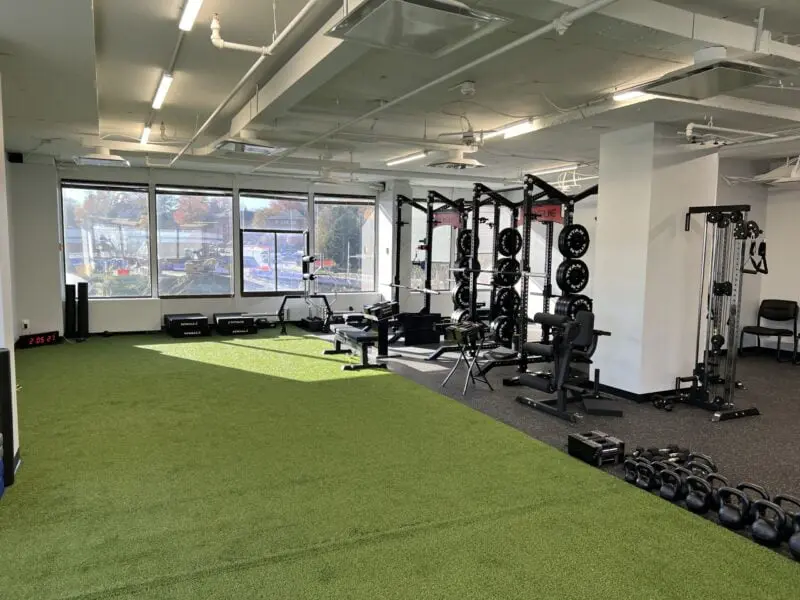

Physical therapy and performance training now open on River Road in Bethesda!

Our new Bethesda facility, located at 5272 River Road, Suite 350 is open! It’s been an exciting journey, and I’m excited to share this incredible 3100-square-foot space with you. But don’t forget about our amazing 2500-square-foot physical therapy and performance training place in McLean, Virginia!

Our new Bethesda facility boasts a range of features, including the CHP Performance Center and Physical Therapy clinic, designed to cater to your health and performance needs.

In case you missed it, in addition to our exceptional physical therapy services, CHP Performance will be introducing an array of exciting programs to enhance your athletic and physical performance:

Performance U: This small-group program is designed for high school athletes who dream of playing in college. It is uniquely tailored and designed using recent advances in sports technology. This personalized approach ensures that athletes receive the training they need to excel in their sport while minimizing the risk of injury. To learn more, click here!

Peak Performance Blueprint: This state-of-the-art assessment provides athletes a customized blueprint for optimizing their athletic potential. Incorporating our years of experience working with elite athletes and force-plate technology (more info about that here), the PPB will show, using clear metrics, how an athlete compares to collegiate athletes in their sport. They will also receive customized recommendations on improving their score to be better prepared for collegiate athletics. To learn more, click here!

Adult Strength and Conditioning: This program is designed for adults worried about re-injury when exercising or seeking a more scientifically designed training program. Our one-on-one sessions are under the direction of a Doctor of Physical Therapy and Certified Strength and Conditioning Specialist. To learn more click here!

If you are interested in any of these programs or have an injury that is bothering you, contact us now!

P.S. We will host our grand opening after the holidays, so stay tuned for future announcements!

Why I don’t coach belly breathing anymore

If you have worked with me as a physical therapy patient in McLean or Bethesda, you know I love talking about breathing.

This is usually well received, but sometimes people look at me like I have two heads.

I get it because I used to think the same thing. “I’m here in physical therapy because my shoulder hurts, and now you are giving me breathing exercises.”

I bring a breathing component into many drills that I prescribe because our body adjusts to the position where it feels most comfortable. That position is the one it can best breathe in.

Sometimes, these adjustments impact the body’s ability to move, resulting in joint pain.

As physical therapists, we can help you correct these problems with drills that assist you in breathing more effectively where you are restricted.

Let’s start by focusing on where the breath comes from.

The lungs are located inside the rib cage. Our rib cage is designed to expand in 360 degrees when we breathe in and compress in 360 degrees when we breathe out. Think of it like an accordion.

When an area of our rib cage is restricted, our breathing is also.

Sometimes, our entire rib cage is stiff, causing people to compensate with an exaggerated belly breath.

While the belly is meant to move with the rib cage, it should not move in place of it. Don’t forget the lungs are in the rib cage, not the stomach!

Pay attention to my breathing cues in this 90/90 hip lift video, beginning at the 50 second mark. I begin with a silent inhale through the nose and a long sigh through the mouse before pausing for 5 seconds. This ensures that my chest and stomach rise as I inhale and reverse as I exhale.

Try including this breathing strategy in your stretches or mobility work, and nasal breath when at rest. Here is an article on the importance of doing so!

New Bethesda location coming soon!

CHP-Bethesda is getting bigger and better!

I am so excited to finally tell you about our new physical therapy and sports performance facility in Bethesda. We are moving 2 miles down the road to 5272 River Road.

You may wonder why we moved so soon after opening our McLean facility.

Our new 3100-square-foot, state-of-the-art facility will allow us to have a sports performance center and physical therapy clinic. This will help us to continue our mission of helping active people like you conquer injury while providing opportunities to train in a setting like none other.

This amazing new facility is being built and is expected to open in mid-November.

Stay tuned for updates on our grand opening and all of the new services we will be providing at the new and improved CHP Bethesda!

P.S – If you need help with something now, we have openings available!

What I wish about training as a high school athlete

This week we have a special guest post from Dr. Samuel Kinney. Dr. Kinney is a performance physical therapist in our McLean location. In addition to being an amazing physical therapist and strength coach, Sam was a successful collegiate soccer player. Learn more about Dr. Sam here.

“Lifting weights will stunt your growth.” “Squatting heavy is the key to training.”

The advice that I received as a high school athlete was all over the place and as a physical therapist, I now roll my eyes.

I wanted to impress my high school coaches and be the best athlete that I could be, but weight training confused me, and I didn’t know where to start.

Weight training in high school often felt like a competition among my teammates.

I placed a large emphasis placed on how much weight was on the bar. This was a result of encouragement from my team and my internal motivation to lift the most weight I could.

There wasn’t much thought put into our weight training program besides that. I eventually had a back injury while attempting to power clean more weight than I was ready for.

Fortunately, I went to physical therapy, which sparked my interest in the sports physical therapy profession. Unfortunately, I had to take time off from the gym and lost a lot of the progress that I had worked so hard for. While back injuries are impossible to prevent, had I known what I know now, I could have greatly reduced my risk of having one.

Training for your sport off the court or field is an essential part of developing strength, speed, and overall athleticism. A more scientific approach to training helps you excel at your sport and keeps you in the game by reducing your risk of injury. But knowing where to start and what to do in the weight room is one of the greatest challenges for a young athlete.

If the weight being lifted is causing you to struggle to maintain form and you are unsure that you can control the weight, it is too much. The advice that I would give to my high school self would be to forget about how much weight is on the bar and instead focus on how well I can control the weight through the full range of motion of the lift. It is more important to progressively increase the weight on the bar over time rather than in one weight training session.

If you are a high school athlete or the parent of one, Dr. Sam Kinney is currently offering free performance assessments as part of our rising-star training program.

This assessment will show you and your athlete the secret to helping them avoid injury and take their performance to the next level.

Contact us for more information and to sign up.


3 training mistakes made by young athletes

After opening our new facility in McLean in December, I jumped back into treating sports physical therapy patients.

Our busiest time was in the afternoon when we saw high school athletes.

Many of these young athletes were training independently in the weight room, and I needed them to change their approach for physical therapy to be successful.

While each athlete needed to change something different, there were three mistakes that I found many were making.


Overtraining

Oh, to be young. Many high school athletes feel invincible and, as a result, push themselves too hard. More is only sometimes better, especially when they are playing on several different teams simultaneously with a demanding school schedule. Constantly pushing the limits causes poor technique in the weight room and increased risk of injury. A more thoughtful approach to strength and performance training will provide the opposite result and reduce injury risk!


Ignoring the basics

Understandably, many young athletes want to focus on the exciting stuff. Lifting heavy weights is exciting and competitive. But improving mobility and foundational movement skills. Not so much.

Building strength on a foundation of poor mobility and movement skills is a recipe for injury.

Can your athlete touch their toes without bending their knees or perform a deep bodyweight squat without falling over? How about a pushup without their chest rising before their trunk?

Below are a couple of exercises we use to address these problems before adding heavy weights.

Lateral step down

Core pushup


Lack of Individualization

Many high school athletes follow generic training programs that don’t consider their individual needs, strengths, and weaknesses. While this works for some, an athlete recovering from an injury is unique and needs a training program tailored to their specific goals and abilities.


If you have an athlete motivated to make the most of their ability, they could be falling for many of the same mistakes.

Contact us if you want a personally designed strength training program.

This program may be all your athlete needs to avoid these common mistakes and take their performance to another level!

×