From the Field to the Physical Therapy Clinic: Common Fall Sports Injuries We’re Seeing

The fall sports season is officially here in the DC area!

Athletes are returning from their summer break, easing back into practices, and—unfortunately—we’re already starting to see a familiar trend in our clinics: a rise in sports-related injuries.

At Cohen Health and Performance, with locations in McLean and Bethesda, we work with athletes every fall who develop issues as they ramp up their training and competition schedules. Whether it’s a cranky knee, a sore ankle, hip discomfort, or a soft tissue strain, these injuries can derail a season before it really gets going.

Why Are Athletes Getting Injured at the Start of the Season?

The start-of-season injury spike often happens for two main reasons:

  1. Sudden Increase in Training Volume
    Some athletes simply aren’t fully prepared for the jump in intensity that comes with daily practices, scrimmages, and games. Even if they’ve stayed active over the summer, their bodies may not be ready for the sport-specific demands of their season.
  2. Mismatch Between Off-Season Training and In-Season Demands
    Many athletes train hard in the summer—lifting weights, running, and following conditioning plans from coaches—but those workouts don’t always replicate the unpredictable, reactive movements of live gameplay. Without that sport-specific preparation, even well-trained athletes can still get hurt.

The Importance of Sport-Specific Preparation

The best off-season training programs start general and gradually become more specific to the sport as the season approaches. This ensures the athlete’s muscles, tendons, and ligaments are ready for the exact movements they’ll face on the field or court.

For example, football is highly reactive—players must change direction quickly in response to opponents. Our video above shows one hurdle based drill that we use in our McLean and Bethesda physical therapy clinics. The athlete reacts to an unpredictable cue, changing direction while clearing hurdles—just like they might have to do in a game. This type of training prepares the body for rapid deceleration, re-acceleration, and sudden direction changes.

Why Deceleration Training Matters

Many injuries, especially hamstring strains, happen during deceleration—when the body must slow down rapidly. The hamstring works hardest when it’s putting on the brakes during sprinting, and if it’s not prepared for that high force, injury risk skyrockets.

That’s why we integrate drills designed to strengthen the hamstring’s ability to decelerate quickly, reduce injury risk, and keep athletes competing at their best.

Free Injury Consultations for High School Athletes

Right now, our McLean physical therapy location is offering free injury consultations for high school athletes returning to play.

If your son or daughter is:

  • Complaining about pain in a joint or muscle
  • Recovering from a recent sports injury
  • Feeling “off” since the season began

…our team can help identify the problem, address it quickly, and get them back to playing without missing significant time.

These consultations are performed by our expert sports physical therapy team in McLean, including myself, Dr. Matt, and Dr. Sam. We’ll assess the injury, pinpoint the cause, and provide sport-specific drills to get the athlete back to full strength as quickly as possible.

Don’t Wait—Act Early

The earlier we address sports injuries, the faster athletes can return to pain-free performance. If you’re in the McLean or Bethesda area and want to make sure an injury doesn’t sideline your athlete this season, contact us today to schedule an appointment.

Why Objective Strength Testing Is Essential in Physical Therapy

In the world of physical therapy, precision is everything—especially when it comes to helping athletes and active adults recover from injury and return to peak performance. Yet, many rehabilitation programs still rely heavily on outdated tools like manual muscle testing (MMT) to assess strength.

While MMT can offer a general idea of a patient’s capabilities, it lacks the objectivity, consistency, and sensitivity required for high-level performance and injury prevention. At Cohen Health and Performance, we believe it’s time to stop guessing and start measuring.

The Limitations of Manual Muscle Testing

Manual muscle testing is a common practice in many physical therapy clinics. A therapist applies pressure to a limb and grades the patient’s strength based on resistance. While this method may help screen for gross weakness, it’s highly subjective.

Key limitations include:

  • Lack of precision
  • Inability to detect small, yet important, strength deficits
  • Inconsistent results between therapists
  • No ability to track subtle changes over time

When returning an athlete to sport, especially after a major injury such as an ACL tear, rotator cuff strain, or ankle sprain, relying on manual testing alone can lead to premature clearance—and an increased risk of reinjury.

Objective Strength Testing in Modern Physical Therapy


Today’s leading physical therapy practices (like Cohen Health and Performance if I don’t say so myself) use objective strength testing tools to deliver data-driven care. Whether through isometric testing devices, force plates, or handheld dynamometers, the goal is the same: measure what matters and act on real data.

Benefits of objective testing include:

🔹 Identify muscular imbalances
Catch asymmetries or deficits in strength between limbs, which are often invisible with manual testing.

🔹 Set clear, measurable goals
Define baseline numbers and establish precise strength benchmarks for return-to-sport decisions.

🔹 Reduce risk of reinjury
Research shows that inadequate strength—especially side-to-side deficits—increases reinjury risk. Objective testing ensures no major gaps are left unaddressed.

🔹 Optimize recovery timelines
Tracking strength improvements over time allows therapists to adjust training loads and progressions with confidence, ensuring that recovery is both safe and efficient.

Why It Matters for You

Whether you’re an elite athlete or an active adult who wants to stay in the game, data matters. When your recovery is based on objective strength testing, you’re no longer relying on a therapist’s best guess—you’re following a personalized plan grounded in science.

At Cohen Health and Performance, our team uses cutting-edge tools and technology to assess your progress and guide your recovery every step of the way. We don’t just help you feel better—we ensure you’re performing better.

Ready to Get Measured?

If you’re serious about your recovery, performance, and long-term health, physical therapy with objective strength testing isn’t a luxury—it’s a necessity.

Reach out to us at our Bethesda or McLean clinic to schedule your evaluation and experience the difference that data-driven physical therapy can make.

Arm Care Day: The Physical Therapy Routine Every Baseball Player Needs

When you’re deep into a baseball season—logging innings, throwing bullpens, or playing back-to-back games—the demand on your arm is relentless. If you’re not prioritizing recovery and strength maintenance, performance drops… and injuries creep in.

At Cohen Health and Performance, we emphasize one key principle to our baseball athletes: Arm Care Days aren’t optional—they’re essential.

We specialize in physical therapy for baseball players, and one of the most valuable strategies we implement for shoulder and elbow health is a consistent arm care routine. Here’s what a proper Arm Care Day should include—and why it’s a game-changer for performance, injury prevention, and career longevity.

Soft Tissue Work: Restore Mobility and Promote Recovery

Baseball places repetitive stress on the shoulder, elbow, and surrounding tissues. That’s why the first step of any Arm Care Day at Cohen Health and Performance includes soft tissue work to:

  • Break up adhesions and reduce tissue restrictions
  • Improve shoulder and thoracic spine mobility
  • Stimulate blood flow to accelerate recovery between games

This is a foundational aspect of the physical therapy approach we use with our pitchers and field players alike.

Isolated Muscle Activation: Build Stability and Control

Throwing isn’t just about power—it’s about control. And that control starts with the small stabilizing muscles around the shoulder blade and rotator cuff.

Our physical therapy sessions on Arm Care Days focus on:

  • Rotator cuff activation
  • Strengthening the scapular stabilizers
  • Reinforcing neuromuscular coordination

This helps athletes maintain healthy mechanics, reduce stress on the shoulder joint, and build a resilient throwing arm.

Overload Eccentrics: Strengthen the Deceleration Phase

The highest forces in throwing happen after ball release—when your arm has to slow itself down. This is the phase that often leads to overuse injuries if not properly trained.

At Cohen Health and Performance, we use eccentric strengthening drills to:

  • Improve the capacity of the posterior shoulder and forearm
  • Build resilience in the tissues responsible for deceleration
  • Maintain strength under in-season fatigue

This strategy is a staple in our sports physical therapy programs for baseball athletes who want to keep their arms strong all season long.

Why Arm Care Days Matter

At Cohen Health and Performance, we often say:
“Arm care is injury prevention, performance enhancement, and career insurance—all rolled into one.”

Whether you’re a high school pitcher chasing a scholarship or a weekend warrior who still throws heat, prioritizing your arm health will:

  • Keep you on the field, not in the training room
  • Help you throw harder, longer, and with better control
  • Extend your playing career by minimizing injury risk

The Cohen Health and Performance Difference

We specialize in physical therapy for athletes—and that includes creating customized Arm Care routines that are tailored to your position, workload, and goals.

If you’re a baseball player who’s serious about staying healthy and performing at your best, it’s time to make Arm Care Days a consistent part of your training.

📍 Serving athletes across Bethesda and McLean, Cohen Health and Performance is your partner in long-term arm health.

Schedule an evaluation here and take the first step toward a stronger, healthier season.

How Isometric Exercises Can Boost Your Physical Therapy Success

If you’ve been through physical therapy with us at Cohen Health and Performance — especially after an injury like a tendinopathy or surgery — there’s a good chance you’ve experienced the power of isometric exercises firsthand.

Isometric exercises are a unique and valuable tool we often incorporate into the rehabilitation process. Unlike traditional exercises where muscles actively lengthen or shorten, isometric drills involve maintaining a static position. The muscle remains engaged without changing length, helping it work safely and effectively during early stages of healing.

While these exercises can be surprisingly challenging, one of their biggest benefits is that they’re gentle on healing tissues. This makes them an ideal starting point for anyone recovering from soft tissue injuries like patellar tendonitis, Achilles strains, calf strains, or even surgical repairs. However, as with any aspect of physical therapy, it’s crucial that these exercises are only performed when appropriate for your specific injury.

Why Are Isometric Exercises Important in Physical Therapy?

Isometric drills offer several key benefits during the rehabilitation process:

  • Reduced Pain Sensitivity:
    Research shows that isometric exercises can help decrease pain around an injury. For many patients, this makes it easier to start moving again confidently and safely.
  • Muscle Strength Preservation:
    When other forms of exercise aren’t possible due to injury limitations, isometric holds can help maintain muscle strength, preventing significant deconditioning during the recovery phase.
  • Joint Angle Specificity:
    The strength gains from isometric exercises are specific to the joint angles in which they are performed. That’s why, in physical therapy, we tailor isometric drills to match the needs of each patient — whether you’re a gymnast requiring deep flexibility or a football player needing powerful joint stability.
  • Improved Joint Stiffness:
    Building joint stiffness is vital for high-performance activities like running, cutting, and jumping. Isometrics play an important role in rehabilitating injuries to structures like the Achilles tendon, calf muscles, and more.

How We Use Isometrics at Cohen Health and Performance

Here’s a look at two isometric drills we commonly use in our physical therapy programs:

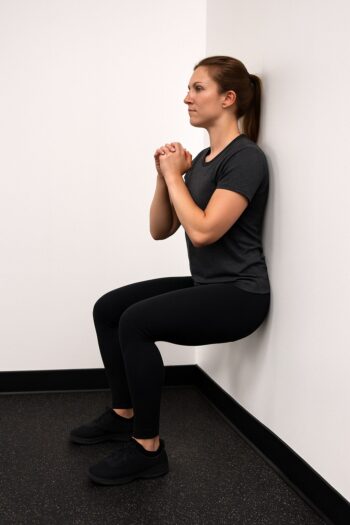
  1. Wall Sit with Heel Raise:
    In this variation, the patient performs a wall sit while staying high up on their toes. This position strengthens the calf and Achilles tendons in a shortened position, while also loading the patellar and quadriceps tendons — critical areas for knee health.
  2. Isometric Split Squat Hold:
    When appropriate, we add a split squat hold to further strengthen the Achilles, calf, and knee tendons. This drill also builds valuable foot and ankle stiffness, setting the foundation for more dynamic athletic movements later in rehab.

We adjust the frequency and intensity of these drills depending on how sensitive the injured tissue is, ensuring that patients progress safely through their rehab journey.

Isometric Drills Are Just One Piece of the Puzzle

While isometric exercises are powerful, they’re most effective when combined with dynamic drills — exercises where the muscles lengthen and shorten through full ranges of motion. A well-rounded physical therapy program will gradually transition patients from static strength work to dynamic, sport-specific movements to ensure a full and confident return to activity.

If you’re currently dealing with a soft tissue injury like tendinitis, a calf strain, an Achilles injury, or even an upper body strain like a pec or bicep tear, we’re here to help. Our expert team can design a customized rehabilitation plan that helps you heal effectively and get back to the activities you love.

Need Help with Your Recovery?

At Cohen Health and Performance, we specialize in helping active individuals recover from injuries through expert-guided physical therapy and performance programs.

Contact us today to schedule an appointment or learn more about how we can help you!

How Physical Therapy Can Help You Keep Training Through Shoulder Pain

For anyone dealing with a history of shoulder pain, getting a solid upper body workout can feel like a minefield. Bench presses, overhead presses, and pull-ups are staple movements in strength training, but they can start to feel off limits when your shoulder is not moving or functioning the way it should.

But here is the good news. Physical therapy and shoulder pain rehab can help you get back to doing what you love in the gym safely and effectively. For athletes and active adults looking for shoulder pain rehab in Bethesda, the right approach allows you to continue training while improving how your shoulder actually functions.

Why Overhead Movements Hurt

Many overhead exercises require a full range of motion at the shoulder. For that to happen, the shoulder joint is not working alone. It relies on a coordinated effort between your shoulder blade (scapula) and your rib cage to allow your arm to move overhead without pain or compensation.

What often gets overlooked is that the rib cage needs to move 360 degrees, expanding and compressing in both the front (anterior) and back (posterior). If it cannot, your scapula cannot rotate properly and your shoulder joint becomes restricted. This can lead to stiffness, discomfort, or pain.

This is something we frequently address in shoulder pain rehab programs, especially for athletes who want to continue lifting and training.

The Role of the Rib Cage in Shoulder Mobility

When you raise your arm overhead, your scapula upwardly rotates around your rib cage. If your rib cage lacks the ability to expand and compress, especially in the upper back or chest wall, that scapular movement becomes restricted. Over time this restriction limits your range of motion and contributes to shoulder pain.

In our Bethesda physical therapy clinic, one of the first things we assess in patients who need shoulder pain rehab is how well their rib cage moves. If we find restrictions, we often start with targeted breathing and mobility drills.

Two Foundational Drills We Recommend

Here are two exercises we commonly use with patients during shoulder pain rehab.

1. Hooklying Overhead Reach with Breathing

This drill helps facilitate sternal movement, which is the rise and fall of your chest bone. This motion is essential for true overhead mobility. By combining this position with focused breathing, you can restore movement in the front of the rib cage.

2. Quadruped or Seated Upper Back Expansion Drills

These drills are designed to open up the posterior rib cage. Breathing is key. You are directing air into the areas that need more movement so your scapula can glide properly when you lift your arm overhead.

These exercises do not just improve mobility. They create the foundation for rebuilding strength.

Build Strength in End Ranges

It is not enough to simply restore mobility. You also need to be strong in those new positions.

This is a key part of effective shoulder pain rehab. Many people regain movement but never build strength in those ranges. That is often why pain returns once they go back to training.

A well designed physical therapy program includes strengthening drills that target these vulnerable positions so your body can handle the demands of lifting, throwing, or overhead sports.

Smart Modifications You Can Make in the Gym

Even as mobility and strength improve, certain movements might still feel uncomfortable. Smart exercise modifications can help you continue training while your shoulder recovers.

Here are two adjustments we often recommend during shoulder pain rehab.

1. Recline Your Bench for Overhead Pressing

Instead of pressing from a fully upright 90 degree position, adjust your bench to around 70 degrees. This reduces the mobility demands on the shoulder while still allowing you to build strength.

2. Modify Your Pull Up Angle

If you find yourself arching your back or rowing yourself to the bar during pull ups, you may be compensating for limited mobility. Bands, assisted machines, or grip modifications can allow you to maintain a more vertical pull without irritating your shoulder.

Physical Therapy Is More Than Just Rehab

The best shoulder pain rehab programs are not just about reducing pain. They focus on helping you move better and train smarter.

Working with a physical therapist can help you:

  • Identify the root cause of shoulder pain

  • Restore proper movement and strength

  • Learn ways to train around limitations

  • Return to lifting and sport without recurring setbacks

For active adults and athletes searching for shoulder pain rehab in Bethesda, the goal is not simply to stop pain. The goal is to build a shoulder that is resilient enough for the demands of training.

Final Thoughts

Shoulder pain does not have to mean the end of upper body training. By improving rib cage mobility, strengthening end ranges, and making smart gym modifications, you can keep progressing while addressing the underlying problem.

If you are struggling with persistent shoulder pain, working with a physical therapist who understands strength training and performance can make all the difference.

If you are looking for shoulder pain rehab in Bethesda, our team focuses on helping athletes and active adults return to training stronger, more resilient, and pain free.

Contact us today to schedule a performance based physical therapy evaluation.

Hamstring Strains: A Sports Physical Therapy Guide to Recovery & Injury Prevention


Hamstring strains are among the most common injuries for athletes, especially those involved in sprinting, jumping, or cutting movements. If you’ve ever felt that sudden pull in the back of your thigh, you know how frustrating and limiting a hamstring strain can be.

At Cohen Health and Performance, we specialize in sports physical therapy designed to help athletes recover from injuries efficiently and come back stronger. In this blog, we’ll break down why hamstring strains happen, how to rehab them properly, and what you can do to reduce the risk of reinjury.

Why Do Hamstring Strains Happen?

Hamstring injuries most often occur when an athlete is sprinting or decelerating. The primary reasons include:

✔️ Fatigue – Tired muscles are more prone to injury.
✔️ Poor lumbopelvic control – Weak core and hip stability put excess strain on the hamstrings.
✔️ Lack of eccentric hamstring strength – The hamstring must absorb force while lengthening during sprinting, making it vulnerable to injury.
✔️ Previous hamstring strain – A history of injury significantly increases the risk of another strain.

Understanding these risk factors allows us to customize sports physical therapy programs that target weak points and prevent future injuries.

Early Rehab: What to Do (And What NOT to Do)

The first instinct after a hamstring strain might be to stretch it out—but this is a common mistake that can slow recovery. Instead, follow these steps:

🚫 Avoid aggressive stretching in the early stages. Stretching an injured muscle too soon can aggravate the strain.
Control pain and inflammation with rest, ice, and gentle movement.
Maintain blood flow through pain-free activity to speed up recovery.

At this stage, a sports physical therapy approach focuses on reducing pain and preserving mobility while preventing further irritation.

Rebuilding Strength & Function

Once the pain and inflammation have decreased, it’s time to gradually load the hamstring to restore strength and function.

At Cohen Health and Performance, we use the Nord Board, a state-of-the-art tool that measures eccentric hamstring strength. This allows us to:

✅ Compare the injured leg to the healthy leg
✅ Assess an athlete’s risk for future hamstring injuries
✅ Develop a personalized strength program based on objective data

The Phases of Hamstring Rehab in Sports Physical Therapy

A structured rehab program moves through progressive phases:

🔹 Phase 1: Isometric Exercises – These exercises activate the hamstring without movement, minimizing strain while building early strength.
🔹 Phase 2: Eccentric Strengthening – Once tolerated, we introduce slow, controlled lengthening exercises to mimic the hamstring’s function in sprinting.
🔹 Phase 3: Velocity-Based Training – To fully restore athletic performance, we gradually add speed, agility, and explosive movements to rebuild elasticity and power.
🔹 Phase 4: Sport-Specific Drills – The final step is returning the athlete to high-level sport movements like sprinting, cutting, and jumping. This is often the most neglected phase, but skipping it can lead to reinjury.

Preventing Hamstring Strains: The Key to Longevity

The best way to avoid a hamstring strain is to ensure your body is strong, mobile, and well-conditioned. In our sports physical therapy programs, we focus on:

✔️ Eccentric hamstring training to build resilience
✔️ Core and pelvic stability work to reduce unnecessary strain on the hamstrings
✔️ Sprint mechanics coaching to improve movement efficiency
✔️ Individualized risk assessments using tools like the Nord Board

Ready to Recover Stronger? Let’s Get Started!

If you’ve suffered a hamstring strain or want to reduce your risk of injury, our expert team at Cohen Health and Performance is here to help. Our sports physical therapy approach ensures you recover the right way—so you don’t just heal, but return to your sport stronger than before.

📩 Contact us today to schedule an evaluation and start your journey back to peak performance!

×