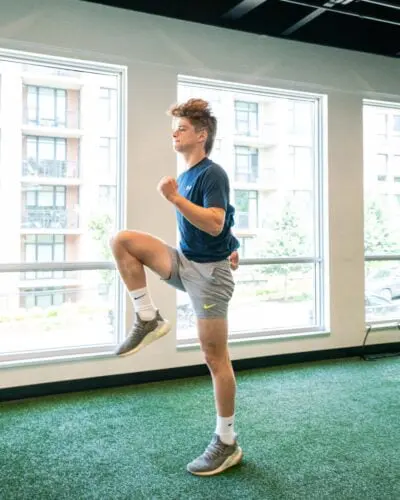
Our most popular physical therapy article of 2024

Here’s a little gift—our most popular article of 2024, just for you!

“My Doctor Said I’m Cleared to Play!”

My patient was thrilled. After months of physical therapy, recovering from knee surgery, she finally received the green light to return to playing soccer.

Unfortunately, I had to bring her back to reality.

The surgeon had done an excellent job—the surgery went smoothly, the knee healed perfectly, and there was no swelling or pain. But while his job was complete, mine was far from over.

Despite making significant progress in physical therapy, the muscles around her repaired knee were still about 30% weaker than those on the other side. Our force plate technology (learn more about that here) revealed that her ability to absorb shock on the repaired side was compromised, and her reaction time was slower.

As much as I wanted to give her the news she was hoping for, allowing her to return to play immediately would have put her at high risk of re-injury.

This scenario is common and understandable. It’s easy to think that physical therapy is over when the doctor says, “you’re cleared.” But in reality, it’s just the beginning.

“Cleared” means the doctor’s role is complete, and now it’s up to us to ensure that you return to play, training, or your active lifestyle as safely as possible.

So, how do we determine when you’re ready to get back in the game? Here are a few key factors we continuously assess throughout the rehab process:

  • Range of Motion: Should be equal to the other side.
  • Strength Testing: The previously injured side should be within 10% of the uninjured side, but ideally, it should be equal. We utilize our technology to make it objective and take away any guesswork.
  • Functional Testing: Specific to your sport or activity.
    • Hop or Jump Testing: Measures your ability to absorb impact and produce force on one side compared to the other. Should be within 10% of the uninjured side, but ideally equivalent. This also gauges how reactive or “bouncy” one side is compared to the other—the closer to equal, the better!
    • Running Analysis: Learn more about that here!
    • Throwing Assessment: For baseball players and other throwing athletes

The last thing anyone wants is a re-injury or a new injury because the body wasn’t 100% ready to return. A thorough return-to-play assessment is essential for anyone looking to resume their sport, activity, or active lifestyle as safely, quickly, and effectively as possible.

Contact us with any questions that you have about how you can ensure that you or your athlete is ready to get back in the game!

Why “corrective exercises” in physical therapy fall short

Back when I was in physical therapy school, I also worked as a strength and conditioning coach with athletes at Northeastern University. Part of our job was to include “corrective” exercises in every training session to address mobility limitations or movement issues. These were low-intensity stretches commonly seen in physical therapy, mobility drills, and other movements that athletes did as part of their warmup.

The idea was solid: reduce the risk of injury by fixing underlying issues. But with 15 years of experience now, I’ve realized that this approach wasn’t as effective as we thought.

The issue with these types of exercises is that they are often performed at an intensity that is too low to produce significant results. Whether you’re a competitive athlete or a recreational gym-goer, your body is used to exerting significant effort when you play, train, or compete. To be effective, corrective exercises need to match that intensity. Your body adapts to effort, not passive movements.

At Cohen Health and Performance, we approach corrective exercises differently. We design customized corrective exercises tailored to each individual. For our physical therapy patients, these are incorporated into their daily routines as “daily essentials” or performed independently before exercise. For our training clients, these correctives are strategically woven into warmups or the training session itself.

But here’s the thing: the best corrective exercise is simply exercise done correctly.

When you perform any exercise with proper technique and enough intensity to challenge your body, it becomes “corrective.” Progress happens when the body is forced to adapt, whether that’s by increasing resistance, moving faster, working through a broader range of motion, or training in a fatigued state.

A strong body is a resilient body—especially when it’s strong through a wide range of motion and capable of handling stress in various conditions. That’s why mastering foundational lifts and progressing them step by step is far more effective than running through a long list of low-effort exercises.

Take the barbell deadlift, for example. It’s a fantastic exercise that can double as a “corrective” for athletes with hip mobility issues or back pain. It challenges core, glute, and hamstring strength while teaching the body how to create intra-abdominal pressure to protect the lower back. It might take time to safely progress to heavier weights, but the payoff is immense: a back that’s strong, resilient, and ready to handle stress.

Watch our Deadlift Tutorial below for tips on how to perform this powerful lift safely and effectively.


We also emphasize high-level movement quality in the end stages of rehab. For athletes, this means testing their ability to maintain excellent form and strength, even under fatigue. This is a critical step to ensure they’re fully prepared to return to their sport or activity.

Check out the video below to see how we approach end-stage rehab for athletes.


If you’re ready to move better, feel stronger, and get back to doing what you love, let’s make it happen. Schedule an evaluation with one of our expert Doctors of Physical Therapy today. Click here to get started.

Surgery or physical therapy?

“Do I Need Surgery? “

If you’ve faced a significant injury and are anything like our sports physical therapy patients, this question probably crossed your mind.

It’s natural to think of ourselves like machines: when something breaks, we believe it needs fixing. But here’s the reality—you’re not a machine, and surgeons aren’t mechanics simply “repairing” broken parts.

In fact, surgeons are more like cleanup crews addressing the aftermath of accumulated wear and tear. And the truth is, many injuries don’t require surgical intervention to heal effectively.

A comprehensive review published in the prestigious Journal of Orthopaedic & Sports Physical Therapy (JOSPT) found no consistent evidence that surgery outperforms non-surgical care in nine different areas of the body. That’s huge!

Now, let’s be clear: surgery has its place. If you’ve suffered a major trauma—like a displaced fracture or a complete rupture of the ACL or Achilles tendon—surgery might be the only path to regaining functional mobility. In these cases, surgical intervention is necessary to restore structural integrity for sports or daily life.

But what about injuries that don’t fit this profile? Chronic pain, nagging injuries, or wear-and-tear issues often drive people toward surgery, believing it will “fix” the problem. Here’s where things get tricky: research consistently shows that surgery doesn’t always deliver long-term benefits, especially when it’s used to address conditions better managed with active, non-invasive approaches like physical therapy.

Surgery doesn’t address the root cause of injuries. If strength deficits, or movement limitations/compensations led to the damage in the first place, those same issues will persist post-surgery unless properly addressed. It’s like mopping up a spill without fixing the leak—temporary relief, but the problem will return.

Active interventions, such as physical therapy, strength training, and movement re-education, can often help you avoid surgery altogether. These approaches focus on restoring balance, improving function, and addressing the underlying factors contributing to pain or injury.

Here’s what you can do to take charge of your health and minimize the need for surgery:

  1. Get Moving: Movement is medicine! A good physical therapist can create a scientifically designed plan tailored to your needs, helping you regain capabilities necessary for the activities that you love.
  2. Address Lifestyle Factors: Stress, poor sleep, and inactivity can all affect your body’s ability to heal. Prioritizing holistic wellness is key.
  3. Be Patient: Healing without surgery takes time, but the results are often more sustainable and come with fewer risks.

Even when surgery is the best option, it’s crucial to address the underlying issues during recovery. Comprehensive rehabilitation ensures you won’t be revisiting the operating room down the road. Think of it as “fixing the leak” while cleaning up the spill.

So, before you consider going under the knife, ask yourself: Have I explored every active option to restore my health?

If you’re dealing with an injury and unsure whether surgery or physical therapy is the right path for your recovery, we’re here to help you figure that out. Schedule an evaluation with one of our expert Doctors of Physical Therapy today and take the first step toward getting back to what you love. Click here to get started.

Avoid injuries with these sports physical therapy tips

What helps elite athletes avoid serious injuries and maintain peak performance? It’s not just skill or power—it’s their pillar strength. Pillar strength, commonly referred to as core strength, forms the foundation of efficient, injury-free movement. A strong pillar allows you to break through training plateaus, improve your performance, and significantly reduce your risk of injuries.

As the saying goes, “You can’t fire a cannon from a canoe.” Just like a cannon needs a stable base, your body needs a strong and stable pillar to generate and transfer power effectively.

What Does Pillar Strength Really Do?

Forget the idea of doing endless crunches or sit-ups to build a stronger core. Your pillar strength isn’t just about aesthetics—it’s about stabilizing the spine and pelvis while controlling forces generated by your arms and legs. When your pillar doesn’t do its job, energy leaks occur, reducing performance and increasing injury risk.

Example: The Sprinter

Picture a sprinter accelerating down the track. If their lower back arches excessively (anterior pelvic tilt), the spine can’t absorb or transfer the energy created by their legs. This results in their powerful hip extension being wasted. The root issue? Their spinal stabilizers aren’t working efficiently to counterbalance the forces from their hips.

Why Pillar Strength Matters in Sports Physical Therapy

Pillar strength is important in every direction of movement—not just forward and backward. Let’s break it down:

1. Rotational Strength (Transverse Plane)

Imagine a baseball pitcher winding up for a throw. They need to rotate their trunk efficiently to deliver a powerful and accurate pitch. Weakness in the transverse plane can cause “energy leaks,” reducing throwing velocity and increasing the risk of injury. This is a common issue we address in sports physical therapy, using rotational core drills to stabilize and strengthen this motion.

2. Lateral Strength (Frontal Plane)

Cutting, landing, or maintaining balance during sports relies heavily on frontal plane strength. Weakness here can lead to a hip drop (Trendelenburg sign) during single-leg movements, creating instability that puts stress on the knees. This instability is a key contributor to injuries like ACL tears, especially in youth athletes. In sports physical therapy, we include frontal plane exercises to improve single-leg stability and prevent these injuries.

Build a Strong Foundation with Sports Physical Therapy

At Cohen Health and Performance, our sports physical therapy programs in McLean and Bethesda focuses on developing pillar stability to enhance athletic performance and prevent injuries. Whether you’re recovering from an ACL reconstruction or aiming to reach new performance levels, building pillar strength across all planes of motion is critical.

Ready to Elevate Your Game?

Take the next step in your athletic journey with a Performance Physical Therapy Evaluation. Our expert team specializes in sports physical therapy to help you move better, perform stronger, and stay injury-free.

Click here to schedule your evaluation today!

Speed Kills: tips to gain that extra edge

As a parent of a high school athlete aiming to compete at the collegiate level, you understand that speed can make all the difference. Faster athletes often outshine their competition, even in physical sports like football, where speed is a game-changer. Fortunately, there are proven ways to help your athlete enhance their speed and give them a competitive edge, whether they’re on the field, track, or court. Below are drills that we incorporate with our sports physical therapy and performance training clients.

Speed Training Essentials for Aspiring College Athletes

Boosting speed requires a comprehensive approach that goes beyond simply moving faster. Here are three key areas to focus on for your athlete’s speed development.

 1. Master the Basics

Just like any other skill, sprinting has specific techniques and the mechanics are where we start as sports physical therapists and performance coaches. Practicing sprint mechanics, such as proper foot strike, forward knee drive, and core activation, is fundamental to achieving an efficient stride. Incorporate drills that reinforce these mechanics, such as marching, skipping, and high-knee runs. These simple yet effective drills provide a strong foundation and encourage form that can help increase speed safely.

Recommended Drills:
– A March

– A Skips

– Stepover Drills (Shin Height)

2. Build Strength in Key Muscle Groups

Running fast requires strength, especially in muscles like the quads, hamstrings, calves, and core. Building strength in these areas is essential not only for speed but also for power, endurance, and injury prevention. Compound lifts and single-leg strength exercises targeting these muscle groups are highly effective in making strides more powerful and reducing the likelihood of injury.

Strength Training Exercises:
– Standing Hip Flexion With Band

– Front Foot Elevated Heel Raise

– Copenhagen Hold with Reach

3. Practice Accelerations and Sprint Drills

A well-rounded speed training program includes work on both acceleration and top-speed mechanics. Acceleration drills help athletes reduce the time it takes to reach their maximum speed, while sprint intervals build stamina for sustained performance. Integrating these drills into regular training can drastically improve an athlete’s on-field performance.

Suggested Speed Drills:
– Wall Acceleration Series

– Sprinter Step Up

Sprint Workouts:
– Flying 10s: Build speed over 20-30 yards, sprint for 10 yards, then slow down.
– 10×10: Sprint for 10 yards, then decelerate quickly; repeat 10 times.

Performance U: A Program for Aspiring College Athletes

For parents of high school athletes dreaming of college-level sports, consider our Performance U small group training program. Performance U is designed specifically to help young athletes develop the speed, strength, and stamina needed to excel at the collegiate level. Your athlete will receive a personalized performance assessment and a custom-designed speed and strength program, coached by our expert team. They’ll train in a supportive, small-group environment that combines personalized attention with the camaraderie of a team.

Give your athlete the best possible foundation for their college sports career. Performance U offers everything they need to stay ahead of the competition and stand out to college scouts. If you are interested, contact us here!

What Performance Physical Therapist, Dr. Biddle, learned from breaking her leg

I’m thrilled to welcome Dr. Catherine Biddle to our physical therapy team in Bethesda. Dr. Biddle specializes in treating gymnasts, dancers, and athletes with hypermobility related conditions. As a former Division I gymnast at Northern Illinois University, she brings both expertise and personal experience in overcoming sports injuries.

She was kind enough to tell us about the injury that inspired her to become a sports physical therapist and what you can learn from her journey.

______________________________________________________________

At 15, I suffered a serious injury during gymnastics practice. While performing a skill called a blind full on bars, I turned too early, causing a fall from 12 feet onto concrete. The result? A broken fibula in three places and a dislocated tibia.

Two days later, I had surgery to insert a plate and eight screws in my leg. My doctors warned I might never compete at the same level again. As a gymnast for 13 years who was being actively recruited by colleges, this news was devastating. I felt lost—until I started physical therapy three weeks after surgery.

When I crutched into my first physical therapy session, feeling hopeless, my therapist did something powerful: she asked me how I was doing—not just physically, but emotionally and mentally. That conversation changed everything. She told me that while recovery wouldn’t be easy or fast, we would do everything we could to get me back to gymnastics. Thirteen months later, I joined a Division I gymnastics program and had a fulfilling collegiate career.

My injury taught me that the physical therapy journey is about more than just the body. It’s about mindset, support, and perseverance. The right therapist can make all the difference, helping you heal both physically and emotionally.

Most importantly, I learned that a surgeon’s prognosis isn’t the end of the story. With the right support system, a positive outlook, and hard work, you can overcome obstacles you never thought possible.

These lessons shape how I approach my work today. I focus on more than just my patients’ injuries—I consider how they’re feeling overall and what their goals are. Healing isn’t just about “fixing” the problem; it’s about helping people return to the activities they love.

So how do you know if you’ve found the right healthcare provider for you?

Ask questions!

Prior to your visit, prepare a list of the questions that are important to you. Your provider should be willing to answer all of your questions, even if they can’t give you a definitive answer at the moment.

Here are 3 questions that I advise asking.

1. Why did this happen, and how can we prevent it from happening again?
Understanding the cause of your injury helps ensure it doesn’t become a recurring issue.

2. What should I be doing at home?
Recovery extends beyond the clinic. Make sure you’re clear on what exercises or precautions you should follow at home.

3. How will we measure my progress?
Your goals should guide your recovery, not just standard benchmarks. Set clear expectations with your therapist to track meaningful progress.

Physical therapy is most effective when it’s a partnership. The more engaged you are in your recovery, the better your results will be. Asking these questions helps you take control of your health and build a stronger relationship with your therapist.

Interested in scheduling an appointment with me or a member of our team? Contact us!

-Dr. Catherine Biddle PT, DPT

×