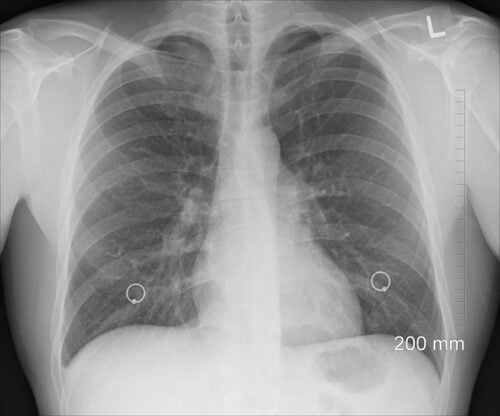
X-Rays and MRIs don’t tell sports physical therapists the whole story

Medical images like X-Rays and MRIs are awesome and a helpful part of the sports physical therapy process. It’s like peering into the secret life of our bones and tissues, but sometimes what we see can be a bit startling.

Picture this: You’ve just got your X-Ray or MRI results. There’s a moment of truth, where you feel like your body’s betrayed you. Maybe you’re staring at an image that seems to scream ‘surgery!’ or ‘pain for life!’

But hold on – it’s not all doom and gloom.

X-Rays provide physical therapists with more general information, especially with bones. They show us the spacing between vertebrae in your back or if there’s a sneaky fracture hiding in there. But when it comes to the softer stuff – muscles, tendons, ligaments – they’re a bit out of their depth.

This is where the MRI comes in, providing more detailed information about our intervertebral discs and soft tissues. It’s high-resolution and insightful, but sometimes all this detail doesn’t help us.

Research has shown that many of us are walking around with meniscal tears in our knees or disc issues in our backs, completely unaware because we feel fine. Then there are times when we’re in pain, get scanned, and the images come back with a shrug – nothing significant.

When it  comes to back pain, about 90% of it is ‘non-specific’. Translation: even with all our tech, we can’t pinpoint the exact cause in most cases. So, do these images really matter?

Well, yes and no.

They’re super valuable when they align with what you’re feeling – when the story your body is telling matches the tale spun by the images. But if you’re holding an X-Ray or MRI report that’s making you second-guess your body’s capabilities, take a step back. It’s just one piece of a much larger puzzle.

Even if an image shows something that looks bad, it doesn’t mean you’re destined for surgery, or a life of pain or inactivity. Our bodies are incredible at adapting and healing. As physical therapists and sports performance coaches, we’re detectives in a way. We look for the root cause of the damage and focus on fixing it, not just the symptoms.

If you’ve got an X-Ray or MRI that’s got you worried, it is important to understand why these issues popped up in the first place and discover what you can do about them.

It’s not just about getting out of pain; it’s about getting back to living your life and doing the things you love, regardless of what the images say. So, keep moving, keep exploring, and remember, your body’s story is much more than a snapshot on a screen.
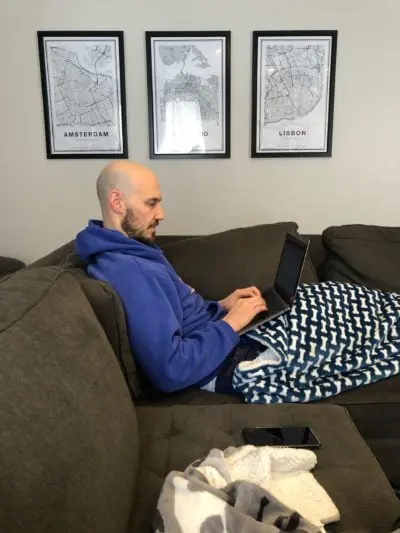

Is sitting the new smoking? Probably not. Physical therapist guest post!

Check out this awesome guest post by one of our amazing sports physical therapists, Dr. Samuel Kinney. Sam is a Doctor of Physical Therapy at our McLean, Virginia location. Enjoy!

-Zac

_______________________________________________________________

Many of our physical therapy patients grappling with lower back pain and hip discomfort find themselves stuck due to prolonged hours chained to their desks.

While some have experimented with sit-to-stand desks to break up static positions, this approach isn’t always effective. This strategy is rooted in the belief that sitting is a primary contributor to back pain, and standing will alleviate it.

However, scientific evidence doesn’t fully support sitting as a clear cause of back pain and an effective physical therapy recommendation. Claims circulating on the internet linking sitting to cardiovascular disease, diabetes, and cancer also lack conclusive backing.

If sitting isn’t the main culprit, what is? Scientific research suggests that a primary factor in back pain and related health issues isn’t excessive sitting but rather insufficient physical activity and exercise.

Those spending long hours seated at a desk without incorporating regular exercise tend to attribute their discomfort solely to sitting.

Let’s reframe the discussion. Sitting itself is not the problem, and it’s not equivalent to smoking. The real issue lies in the lack of activity and exercise during an 8-hour workday.

The solution I recommend is incorporating microbreaks or “movement snacks,” as I often mention to my patients. Many people adopt the Pomodoro Technique to enhance productivity. Essentially, you work for 25 minutes and then take a 5 minute break. Utilize those 5-minute breaks every 30 minutes or hour to move your body instead of staring at an Excel sheet.

These microbreaks should extend beyond merely stepping away from your workstation or engaging in casual conversations with your coworkers. They should involve activities that elevate your heart rate and promote joint mobility.

Here are some examples of microbreaks that we recommend to our physical therapy patients:

Boost your heart rate:

  • 1) Climb 3-5 flights of stairs.
  • 2) Perform 5 reps of body weight squats, toe touches, and glute bridges.

Get your joints moving:

By incorporating these short, targeted breaks into your day, you can reduce the impact of extended periods of sitting and promote overall well-being. Remember, it’s not about demonizing sitting but about maintaining a balance between sedentary work and physical activity.

This increases your groin injury risk by 17 times!

This week, we’re excited to feature another guest post by Dr. Samuel Kinney. Dr. Kinney is a performance physical therapist at our McLean location. You can learn more about Dr. Sam here.

As a sports physical therapist and someone who is passionate about maximizing human performance, I’m constantly intrigued by the unique challenges athletes face in different sports. Field sport athletes and hockey players, in particular, encounter distinct movement demands due to the dynamic, multi-directional nature of their sports.

Unlike athletes who primarily run in straight lines, such as sprinters, field sport athletes and hockey players rely heavily on their hip muscles. This continuous, varied use of the hips puts them at a higher risk of injury, especially in the hip and surrounding muscles. Gaining a deep understanding of the anatomy and demands of these sports is essential for both injury prevention and achieving peak performance.

The hips are driven by four primary muscle groups. The glutes and hip flexors manage forward and backward movement, while the abductors (located on the outside of the hip) and adductors (found in the groin or inner thigh) control lateral or side-to-side movements. Sports involving a lot of lateral movement, like skating, place extra stress on the abductors and adductors, making them more prone to overuse or strain injuries.

Maintaining a balance in muscle strength is crucial. Ideally, we aim for a 1:1 strength ratio between these muscle groups. If an athlete’s adductor-to-abductor strength ratio drops below 0.8, their risk of suffering a groin strain skyrockets by 17 times.

To reduce the risk of hip injuries, it’s essential for athletes to focus on strengthening both the adductors and abductors equally. Keep in mind that hip strength can fluctuate throughout the season, so it’s vital to work on these muscles beyond regular practice sessions.

Wondering about the strength ratio of your hips? I suggest scheduling an appointment with one of our sports physical therapy specialists to assess your hip strength. This proactive step could significantly reduce your risk of groin injuries during the season.

For those eager to start strengthening their adductors and abductors, here are two exercises to include in your routine:

1. Copenhagen Plank for Adductor Strength: Aim for 3 sets of 30-45 second holds. This exercise is excellent for building up your inner thigh muscles.


2. DNS Side Plank for Hip Abductor Strength: Try 3 sets of 12 reps. This exercise helps strengthen the outer hip muscles, which are essential for lateral movements.

Remember, whether in sports, physical therapy, performance training, or life, balance is key. By maintaining a balanced strength ratio in your hips, you’re not only preventing injuries but also optimizing your performance on the field or rink.

What breaking my nose taught me about physical therapy and performance training

My nose healed up, so I assumed I was fine (this was clearly before I became a sports physical therapist)…

It was the late 90s, and I had broken my nose a few weeks prior. My doctor cleared me to return to wrestling practice as long as I could avoid contact to the face.

Surprisingly, my middle school teammates respected that, and I was able to fully return to the mat. What was also a surprise was that I struggled to rebuild my conditioning as I continued to struggle to breathe through my nose. Turns out I had a deviated septum because of the fracture and ultimately had to get surgery to fix it.

I quickly realized that feeling better and hitting peak performance is about more than heavy training and conventional approaches to sports physical therapy.

Survival is your body’s number 1 priority, and it will pull out all the stops to maintain that sweet ability to breathe– even if it means putting more stress on other areas.

Nasal breathing is the VIP pass to effective respiration. It’s the body’s go-to strategy when you’re relaxing and even during those moderate sweat sessions. Breathing through your nose isn’t just about getting air in and out – it’s a full-service operation. It filters, humidifies, and regulates the temperature of the air you’re breathing. And here’s the kicker – it lets you extract more oxygen because it takes longer than mouth breathing.

But wait, there’s more. Breathing through the nose isn’t just a respiratory hack; it’s a triple threat. It’s like the Swiss Army knife of wellness, regulating stress, blood pressure, and even boosting the immune system.

Now, how do you get in on this nasal breathing action? Easy. Start with a 5-minute daily ritual of relaxed breathing. Inhale and exhale through the nose, throw in 5-second pauses after each exhale, and ensure that the exhale is twice as long as the inhale. It’s like a mini-vacation for your respiratory system.

Quick side note: if you’ve got anything messing with your ability to breathe – asthma, allergies, or a deviated septum – don’t be a hero. Talk to your doctor or physical therapist about it. These issues can throw a wrench in your nasal breathing game and mess with all your best efforts.

3 physical therapy exercises to keep your back healthy from home

I hope that you took full advantage of last week’s long holiday weekend.

My weekend was full of food, family, football, and plenty of time to relax.

In today’s constant, go-go-go society, we all can benefit from a little more time to relax and may help improve your outcomes in physical therapy. But for those of us who are used to moving constantly, this can result in back discomfort.

Research shows that decreased daily movement increases the risk of lower back pain.

Our spines are designed to move, and the structures in our lower backs (most notably, our discs) do not receive optimal nutrition and blood flow when we are sedentary.

The risk for lower back pain further increases if you have a history of lower back pain.

If the holidays are causing you to be less physically active than normal or you have a history of lower back pain, the activities below can make a huge difference!

The goals of these activities are to get the back moving and get the stabilizing mechanisms of the spine going!

Start by performing these activities a couple of times per day as a “movement break”.

  • Spinal Segmentation: 3 spinal waves in each direction
  • 90/90 Hip Lift: 3 sets of 5 breathing cycles (each breathing cycle is in through the nose, followed by a full exhale, followed by a 5-second pause)
  • Physioball rollouts: 2-3 sets of 5 (try performing this with a breath at the top of each rep!)

P.S. If you are looking to solve your chronic back pain once and for all, contact us to set up an evaluation for back pain physical therapy in our McLean or new Bethesda location!

Traveling hurts!

Recently, I was working with a physical therapy client who was sharing her Thanksgiving travel plans with me—multiple rest stops and long hours in the car.

If you enjoy crowded airports and endless traffic, then this is almost your favorite time of year!

But, if you’re like most people, holiday travel isn’t exactly your idea of fun.

It seems like delays are inevitable. Remember the Southwest fiasco last year?

All that extra time sitting in the car or waiting at the airport can be uncomfortable. Your back stiffens up, your hips ache, and you start to feel tight all over. We hear about this a lot at our physical therapy clinics in McLean and Bethesda.

Holiday travel is already stressful, and discomfort is the last thing you need.

So, what can you do?

Move around! There’s no such thing as a perfect sitting posture—what’s important is to keep changing positions.

In our daily lives, we naturally shift from side to side as we stand and move. But this decreases when we’re sitting in a car, at the airport, or on a plane, causing discomfort in more sensitive areas of the body.

When sitting, try to locate your “sit bones”—the bones at the bottom of your pelvis that you sit on. Every 10-15 minutes, shift your weight from one “sit bone” to the other, and occasionally distribute your weight evenly for 5-10 minutes.

As a physical therapist, I often recommend alternating between having your legs straight and bent, and whenever possible, get up and take a walk. If you’re on a flight with me, you’ll see me stand up as soon as the seatbelt sign goes off!

If your neck, chest, or upper back starts to feel tight, remember the 20/20/20 rule!

Staring at your phone for too long can cause upper body discomfort.

The 20/20/20 rule, which comes from optometry, suggests that for every 20 minutes of focused activity, you should take a 20-second break and look at something 20 feet away.

This reduces strain on a single point and helps alleviate upper body tension.

These strategies should help reduce the tension that comes with holiday travel. However, they might not be enough if you have areas of your body that are recovering from an injury or are particularly sensitive.

Reach out to us to find the ultimate solution to your discomfort and start feeling your best this holiday season!

×