Don’t Trust Your Pain

We have all experienced physical pain (in fact, my own history of low back pain is what interested me in sports physical therapy).

Maybe you injured your back lifting weights. Perhaps you hurt you shoulder playing catch with your kids. You may have irritated your knee when training for a marathon.

You decide to see your doctor, physical therapist, or medical provider of choice. They then prescribe the recommended treatment or “plan of care.”

Throughout the course of treatment, you determine if you are getting better by monitoring your pain. Is it decreasing? Is it staying the same or getting worse? If your pain is improving, the treatment is working. If not, it is failing. Pretty straight forward.

That is the way that standard physical therapy views treatment but is short sighted.

Modifying your daily activities or exercise routines will help pain quickly improve in the short term but the root causes of the pain remain. This is when many people stop going to physical therapy or performing their home exercise routine.

This pain-free period of time provides the body with an opportunity to address the root causes of pain. This is essential if you wish to prevent it from returning in the future while returning to full activity.

Pain is a prediction made by the brain. When pain continuously occurs during a movement or activity, the body learns to expect it. This expectation must lessen for pain to ultimately disappear during aggravating activities. If you really want to nerd out on pain science, check out this article by my friend and fellow physical therapist, Zac Cupples.

Imagine that you have lower back pain every time that you attempt to lift something off the floor such as deadlifting a barbell in the gym or emptying dishes out of the dishwasher.

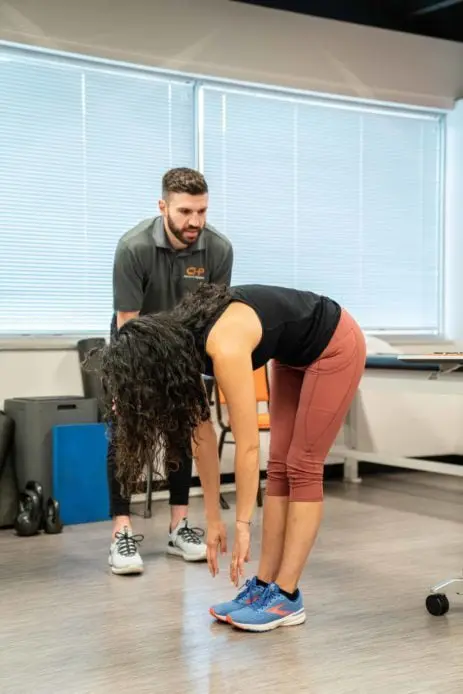
The brain has an expectation that this bent over position will hurt. Therefore, similar positions must be experienced without pain. Does this mean that you should start deadlifting on day 1 of treatment. Absolutely not. The best solution is to start with something less threatening and build from there. Below is an example of a great activity that physical therapy patients with low back pain start with.

The brain will then determine that these positions are not threatening, ultimately reducing risk of pain in the future while facilitating a full return to active life.

If you are an active adult ready to solve chronic pain for good, contact us to receive a customized home exercise program today!
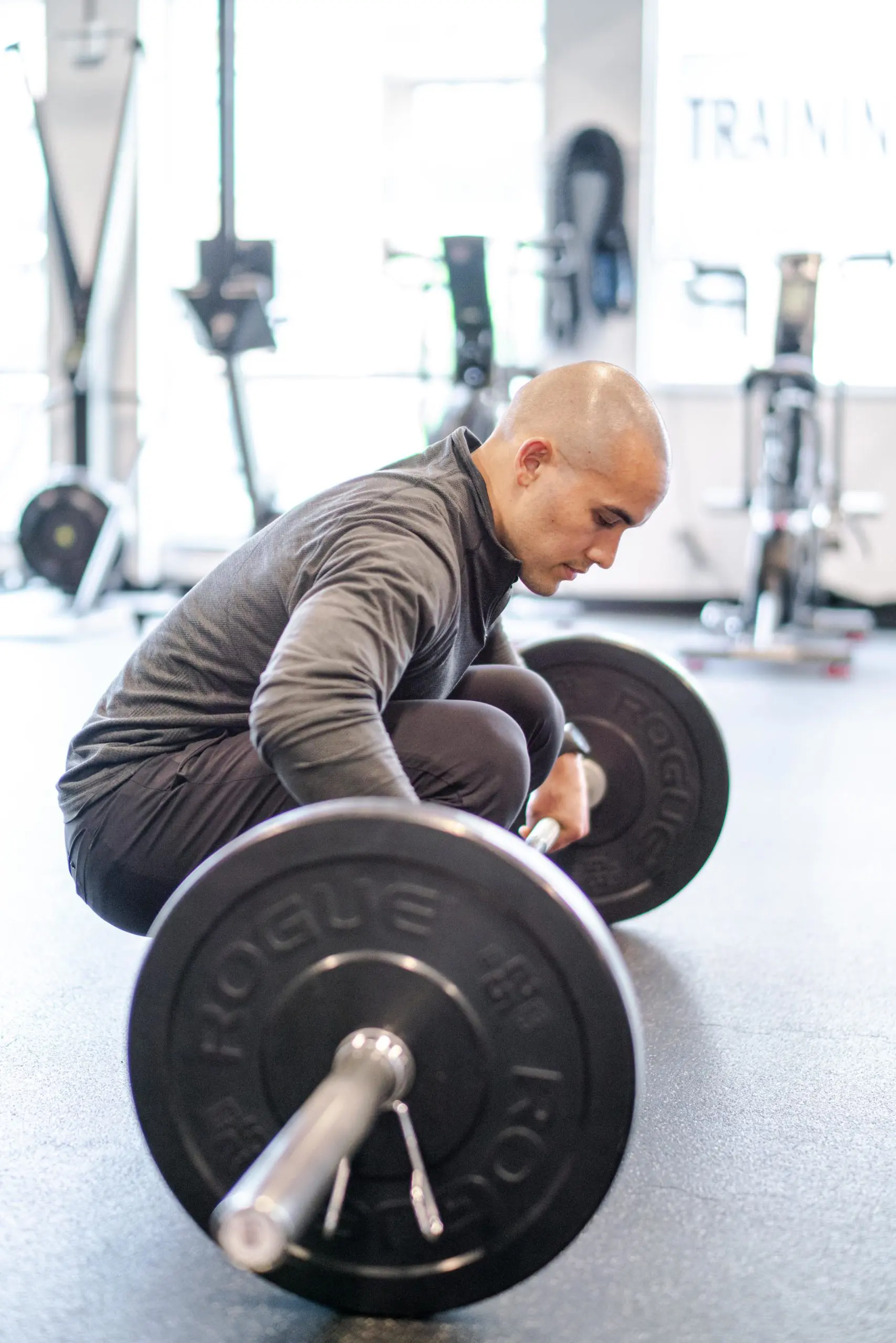
How Our Physical Therapists Coach Squats for People with Low Back Pain

Did you know that experts estimate up to 80% of the population will experience back pain at some time in their lives.

The sports physical therapy patients that we often assume that they no longer can perform common weight training exercises like squats.

However this is not the case. People experiencing lower back can continue to perform these exercises however may require the help of a performance physical therapist to learn how to most effectively do so.

Check out the video below to see how I coach squats for our physical therapy patients experiencing lower back pain.


One Quick Test of Shoulder Health

It’s not as easy as it sounds.

Maintaining a quadruped position (hands and knees) reveals a great deal about your upper body strength and preferred movement strategies. For these reasons, we use this position as a test and exercise within our sports physical therapy setting.

Even strong and muscular patients commonly assume a quadruped position with their shoulder blades pinched close together and deep lower back arch (belly button dropped towards the ground).

This position is often utilized because it conserves energy and allows the body to be lazy. Compression from the lower and upper back is used to hold the torso up against gravity, instead of the abs and muscles involved with reaching. These strategies are common among folks experiencing back pain, shoulder pain and a variety of other issues.

The abs and muscles involved with reaching (for example, the serratus anterior) are essential components of athletic performance, running, walking and pretty much being a human being.

As these skills diminish, the risk of experiencing various injuries may increase.

The bear test is a great way to see if test your upper body strength and movement capabilities.

Think you have what it takes to pass the test? Give it a shot with this drill!

Photo Credit

Polar bear” by tharendra is licensed under CC BY-ND 2.0.

Speed Up Your Recovery From Back Pain

As anyone who has thrown their back out and needed physical therapy will tell you, bending over feels rough for several days after.

Putting on socks and even sitting down is uncomfortable as the body attempts to prevent the lower back from moving, especially into flexion.

Flexion of the spine is commonly the most aggravating movement for anyone experiencing an acute episode of back pain. In physical therapy we test this by asking our patients to touch their toes. Once the acute episode subsides, the next step is training and learning to tolerate slow, controlled movements of the spine.

When tolerated well, the reverse crunch is great drill to teach this quality and can be used effectively as a warmup in the gym.

Oftentimes this is where the injury rehabilitation process stops. At this point the body can tolerate all normal daily activities however it has not learned to manage rapid movements of the spine, such as those that occur in sport or in the gym.

The Med Ball slam is a great drill to train the spine to tolerate movements that involve rapid spinal flexion. This drill should be pain free before attempting any heavy Olympic lifts like a clean or a snatch.

Also, remember to avoid using a ball that bounces as we don’t want any broken noses from this drill!

The first drills that we teach to youth athletes

It is essential to understand the demands placed onto the body when working in a sports physical therapy, injury rehabilitation, and performance training setting.

Sports and weight training require athletes to control the body when moving rapidly.

If an athlete wishes to own the “stack” (stacking of our head, rib cage and pelvis over one another) and protect their lower back they must be capable of doing so when performing high velocity movements.

When youth athletes first train, we use medicine ball drills to teach this ability.

The medicine ball chest pass is a great drill to teach this capability. During this the drill, the athlete is generating enough velocity to propel the ball into the wall and back. As this occurs, it can be easy to lose the “stack” requiring the athlete demonstrate a higher of level of body control.

After mastering the chest pass, it is time to bring the arms overhead. More trunk strength and control are required with this movement and the ability to manage intra-abdominal pressure is further challenged. Check out this exercise here.

These are just a couple of the exercises that we incorporate into the training sessions and warmups for our youth athletes.

If you interested in learning more about the summer training options for youth athletes at CHP,  please contact us!

Is Your Doctor (or physical therapy clinic) Taking Care of You?

Recently, I joined my mother-in-law for a visit to a physician’s office.

The physician she saw has a solid reputation and is known as a “go-to” expert in his field.

During the visit he spent a total of 5 minutes with my mother-in-law, glossing over test results and providing very brief recommendations.

He appeared to be speaking as fast as he could so that he could finish the visit and to get to his next patient. After his rushed explanation, we attempted to ask questions, which he answered while backing out of the room.

Sadly, experiences like this are very common in the world of healthcare and I do not blame the healthcare providers because they oftentimes are not left with much of a choice.

The health insurance industry consistently reduces reimbursement to health care providers, forcing them to schedule more patients within a fixed time period. As a result, the quality of care suffers, and everything becomes less personalized.

This also occurs in physical therapy, forcing many clinicians to resort to “cookie cutter” protocols.

If you go to Physical Therapy because of lower back pain then you get put on the lower back pain protocol, shoulder pain=shoulder protocol, etc.

Many times, this works, however, it is not the best choice for those looking to live an active, pain free, and healthy life.

For this reason I typically seek out practitioners that are out of network with health insurance as it enables them to provide me with the highest quality of care possible. In this approach I am treated like an individual and I get to ask all the questions that I would like so that I can a better understanding of my health.

We are out of network providers here at Cohen Health and Performance. We strive to get the best possible results for our patients in the least number of visits, while also providing the education necessary to prevent future issues from occurring.

People can feel better, move better, and enjoy an active lifestyle.  Our mission at CHP will always be to take the best possible care of our patients and that is why we are out of network with health insurance.

Interested in learning more about how this approach can help you? Contact us here!

×