Physical therapy and performance training now open on River Road in Bethesda!

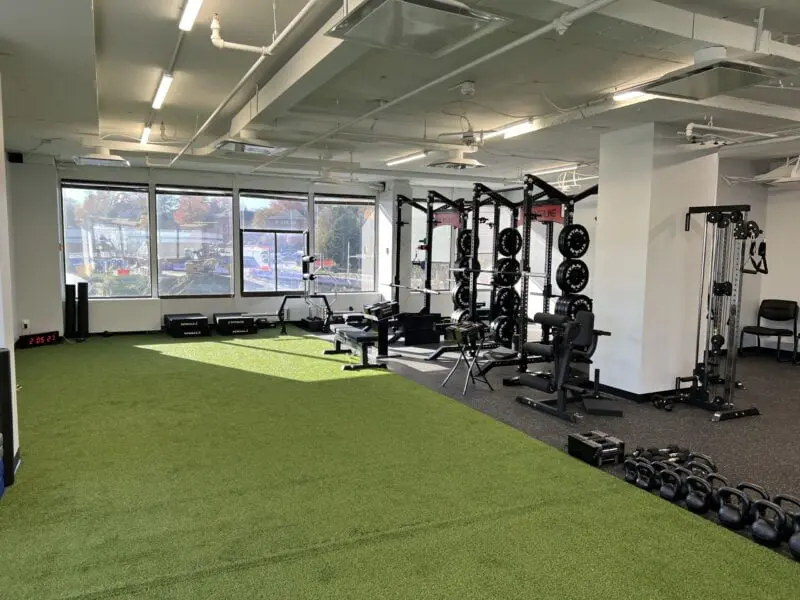
Our new Bethesda facility, located at 5272 River Road, Suite 350 is open! It’s been an exciting journey, and I’m excited to share this incredible 3100-square-foot space with you. But don’t forget about our amazing 2500-square-foot physical therapy and performance training place in McLean, Virginia!

Our new Bethesda facility boasts a range of features, including the CHP Performance Center and Physical Therapy clinic, designed to cater to your health and performance needs.

In case you missed it, in addition to our exceptional physical therapy services, CHP Performance will be introducing an array of exciting programs to enhance your athletic and physical performance:

Performance U: This small-group program is designed for high school athletes who dream of playing in college. It is uniquely tailored and designed using recent advances in sports technology. This personalized approach ensures that athletes receive the training they need to excel in their sport while minimizing the risk of injury. To learn more, click here!

Peak Performance Blueprint: This state-of-the-art assessment provides athletes a customized blueprint for optimizing their athletic potential. Incorporating our years of experience working with elite athletes and force-plate technology (more info about that here), the PPB will show, using clear metrics, how an athlete compares to collegiate athletes in their sport. They will also receive customized recommendations on improving their score to be better prepared for collegiate athletics. To learn more, click here!

Adult Strength and Conditioning: This program is designed for adults worried about re-injury when exercising or seeking a more scientifically designed training program. Our one-on-one sessions are under the direction of a Doctor of Physical Therapy and Certified Strength and Conditioning Specialist. To learn more click here!

If you are interested in any of these programs or have an injury that is bothering you, contact us now!

P.S. We will host our grand opening after the holidays, so stay tuned for future announcements!

Why I don’t coach belly breathing anymore

If you have worked with me as a physical therapy patient in McLean or Bethesda, you know I love talking about breathing.

This is usually well received, but sometimes people look at me like I have two heads.

I get it because I used to think the same thing. “I’m here in physical therapy because my shoulder hurts, and now you are giving me breathing exercises.”

I bring a breathing component into many drills that I prescribe because our body adjusts to the position where it feels most comfortable. That position is the one it can best breathe in.

Sometimes, these adjustments impact the body’s ability to move, resulting in joint pain.

As physical therapists, we can help you correct these problems with drills that assist you in breathing more effectively where you are restricted.

Let’s start by focusing on where the breath comes from.

The lungs are located inside the rib cage. Our rib cage is designed to expand in 360 degrees when we breathe in and compress in 360 degrees when we breathe out. Think of it like an accordion.

When an area of our rib cage is restricted, our breathing is also.

Sometimes, our entire rib cage is stiff, causing people to compensate with an exaggerated belly breath.

While the belly is meant to move with the rib cage, it should not move in place of it. Don’t forget the lungs are in the rib cage, not the stomach!

Pay attention to my breathing cues in this 90/90 hip lift video, beginning at the 50 second mark. I begin with a silent inhale through the nose and a long sigh through the mouse before pausing for 5 seconds. This ensures that my chest and stomach rise as I inhale and reverse as I exhale.

Try including this breathing strategy in your stretches or mobility work, and nasal breath when at rest. Here is an article on the importance of doing so!

A physical therapist’s key to chronic shoulder pain

Recently, I’ve been hanging at a local gym, providing physical therapy in Bethesda and McLean to their members and the most common injuries involve their shoulders.

If you do a lot of weight training or CrossFit or are interested in having healthy shoulders for years to come, keep reading!

Shoulder injuries often occur when the shoulder is repetitively challenged at the limits of its motion, where joints are most vulnerable.

Many people attempt to solve this issue by stretching. Instead, focus on these two areas.

End-Range Strength Training

When your shoulder is pushed to its extreme ranges of motion, the muscles responsible for controlling the shoulder joint are challenged. These muscles struggle to generate the force needed to maintain stability because they are weaker in these positions. This weakness increases the risk of overuse injuries and may create wear and tear on the joint.

Physical therapy is the key to addressing these issues effectively. Rather than focusing solely on increasing flexibility, it’s about training the muscles to handle these extreme positions and generate the necessary strength to support the shoulder. Here is a drill I recently taught a weightlifter struggling with shoulder pain when lifting weights overhead to address this issue.

Get the rib cage moving

The rib cage is the foundation that your shoulder blade rests on, and the position of your rib cage will direct your shoulder where to go as you move.

As you reach overhead, your upper chest should expand. Unfortunately, many weightlifters or people who sit at desks all day have stiff chests that prevent this, resulting in extra stress to the shoulder joints.

If you love to crush chest workouts or are sitting a lot, give this exercise a shot as part of your daily routine or warmup.

What to do if you have months or years of shoulder pain

Work smarter, not harder.

Many people I’ve worked with have seemingly tried everything but didn’t first learn where the pain was coming from. They could have saved a lot of time and effort by first discovering the root cause. If you want to finally solve your shoulder pain, contact us to schedule a physical therapy evaluation today!

New Bethesda physical therapy and performance space is almost here!

As the band Europe said, it’s the final countdown!

Our new sports physical therapy and performance training facility in Bethesda, located at 5272 River Road, is 3 weeks from opening!

We can barely contain ourselves anymore as we prepare to move to this beautiful 3100-square-foot facility, complete with the CHP Performance Center and Physical Therapy clinic.

In addition to our physical therapy services, CHP Performance will be offering:

  • Performance University

    Performance U is a small-group program designed for high school athletes who dream of playing in college. It is uniquely tailored and designed using recent advances in sports technology. This personalized approach ensures that athletes receive the training they need to excel in their sport while minimizing the risk of injury. Learn more about this program here!

  • Peak Performance Blueprint

    This state-of-the-art assessment provides athletes with a customized blueprint for optimizing their athletic potential. Incorporating our years of experience working with elite athletes and force-plate technology (more info about that here), the PPB will show, using clear metrics, how an athlete compares to collegiate athletes in their sport. They will also receive customized recommendations on improving their score to be better prepared for collegiate athletics. Learn more here!

  • Adult Strength and Conditioning

    If you are worried about re-injuring yourself when exercising or are looking for a more scientifically designed training program, this is for you! Our one-on-one sessions are under the direction of a Doctor of Physical Therapy and Certified Strength and Conditioning Specialist. Learn more here!

Keep an eye out for an announcement coming soon about our grand opening.

I would love to see you there!

New Bethesda location coming soon!

CHP-Bethesda is getting bigger and better!

I am so excited to finally tell you about our new physical therapy and sports performance facility in Bethesda. We are moving 2 miles down the road to 5272 River Road.

You may wonder why we moved so soon after opening our McLean facility.

Our new 3100-square-foot, state-of-the-art facility will allow us to have a sports performance center and physical therapy clinic. This will help us to continue our mission of helping active people like you conquer injury while providing opportunities to train in a setting like none other.

This amazing new facility is being built and is expected to open in mid-November.

Stay tuned for updates on our grand opening and all of the new services we will be providing at the new and improved CHP Bethesda!

P.S – If you need help with something now, we have openings available!

Fitness watches: what stats should you care about?

Dr. Kelly Henry here. I work with lots of runners in McLean as physical therapy and performance training clients. We all know a runner who is obsessed with their watch, and with all the technology these days, your fitness watch can tell you just about anything.

This is informative and overwhelming at the same time.

So many statistics are provided, but how many of them are relevant? And if they are relevant, what do they mean? After doing a deep dive into my own watch (a Garmin Venu Square), and some market research on other running watches’ statistics, here is what you should care about:

Resting heart rate 

What this means: How fast your heart beats when you are not doing any activity.

Why you should care: A normal heart rate ranges from 50-100 beats per minute, but more importantly, your watch is learning what is normal for you. Fitness watches usually do a good job of tracking this. Knowing your resting heart rate is a good indicator for helping you determine what your heart rate should be when you’re exercising. A raised heart rate can indicate a number of things, but regarding your training, it can indicate overtraining and a lack of recovery.

Heart rate zones 

What this means: Most fitness trackers divide your heart rate into Zones 1-5. These are determined based on your resting heart rate and a hypothetical maximum heart rate derived from a standard calculation.

Why you should care: You can use your heart rate zones to guide the intensity of your training. Most of your workouts should be performed in Zones 2-4. If you are performing cardiovascular exercise, exercising in Zones 1-3 will provide more of an aerobic benefit (lower intensity, longer duration), whereas Zones 4-5 should focus more on anaerobic systems and power development (fast runs, sprints, or interval training). If you aim to address certain improvements (speed vs. endurance), using heart rate zones can be a great objective way to determine how to adjust your perceived effort. Keep in mind heart rate can be impacted by other factors, including heat and time of training.

Cadence 

What this means: Simply put, cadence is how many steps you are taking in one minute. Aka, how fast your feet are moving.

Why you should care: Measuring cadence helps to make you aware of your stride length and energy expenditure while running. A longer stride often results in a lower cadence and vice versa. Research has shown that patients with knee pain after running often benefit from a shortened stride by increasing stride length. An ideal cadence for most people is 170-180bpm (beats per minute).

Distance 

What this means: How far you ran/walked/moved.

Why you should care: Tracking distance ensures that you are progressing your exercise appropriately and is one of the main things runners care about. While some people prefer time-based exercise, distance may be easier to track if you are working on maintaining a consistent pace. Tracking distance over time is important to ensure there is adequate training volume and can prevent over or under-training. Generally, you should aim for a ratio between 0.80-1.20 when comparing month-to-month averages. This means that the weekly average of this month’s distance is not less than 80% or more than 120% of the weekly average of last month’s distance. Your watch should calculate your weekly mileage for you! Use this mileage in the following formula:

(Week 1 distance + Week 2 distance + Week 3 distance + Week 4 distance) / 4 = Average Workload)
Then divide this number by the average workload from the previous month. This is more accurate for more experienced runners, while less experienced runners or those who run shorter distances may be able to increase their distance more liberally.

Heart Rate Variability (HRV)

What this means: The variation in time between heartbeats. Although our heartbeat is often described as a metronome, it is not. There are small differences in the intervals between each of your heartbeats, which are impacted by your sympathetic nervous system. HRV depends on multiple readings, including core body temperature, circadian rhythm, metabolism, and sleep cycle, to make the best estimate.

Why you should care: In a broad scope, increased HRV can be correlated with better aerobic fitness (if there is no underlying pathology). While it’s difficult to properly measure HRV strictly from a wearable, it can indicate training adaptations and improvements in cardiovascular health. HRV is good supplemental data but shouldn’t be the basis for any training changes since the sensitivity of this measurement is limited, and the most accurate HRV reading will come from a controlled clinical setting. Multiple comorbidities can impact HRV, including chronic pain, inflammation, insomnia, concussions, depression and anxiety, and other stress.

These 5 statistics only scratch the surface of what your fitness watch can do for you. If you are a runner searching for an advantage over your competition, schedule a consultation by replying to this email. In this consultation, she will help you determine how to use technology to your advantage and other ways to improve your performance.

×